 Your organic nutrition
Your organic nutrition

This blog entry is focused on how to illuminate microgreens to affect the growth and nutritional content of microgreens...
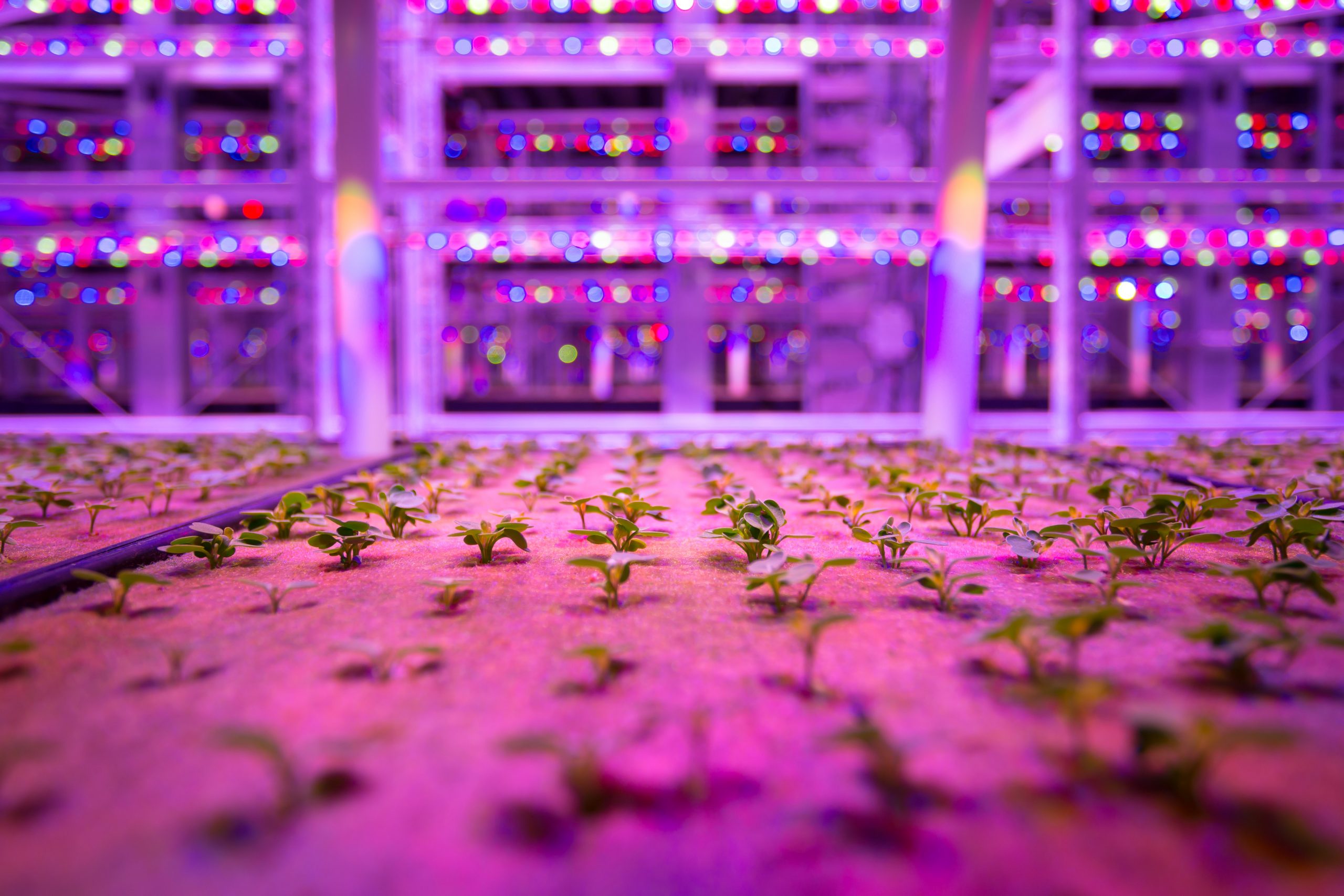
This blog entry is focused on how to illuminate microgreens to affect the growth and nutritional content but before we dive into it, let’s get one thing out of the way. Growing a batch of microgreens doesn’t require you to know any of the following information. Just some good quality seeds, a container to grow, soil from your backyard, clean water, a willingness to get your hands dirty and of course, the SUN.
So you have decided to get into cultivation of microgreens. Whether you did so after trying out a delicious salad from the nearby organic restaurant or had a friend suggest it to you, it surely has caught your attention. Just like any ordinary plants, microgreens need a substrate to grow upon, water to transport nutrients, air to breathe and light to synthesise all those beneficial minerals and phytochemicals you may know about. If you are unaware of the health benefits of including microgreens into your diet, check out this article here to find out more.
You can get as nit-picky as you want to micro-manage the ideal lighting conditions of your prized tiny leafy friends, but know that no amount of tightly regulated artificial light can replace the complete nourishment sunlight can provide in natural conditions, not yet anyway, maybe in the future.
When the term “Light” is used, it refers to a small fraction of the electromagnetic spectrum which includes the visible light spectrum (range of wavelengths visible to the human eye). While humans can perceive wavelengths from 380-740nm as visible light, plants have been found to respond to ultraviolet light from 260nm to infrared radiation up to 850nm. Not all wavelengths of this range are absorbed equally. The most important range of light required for plants is called PAR (Photosynthetically Active Radiation) which ranges from 400-700nm.
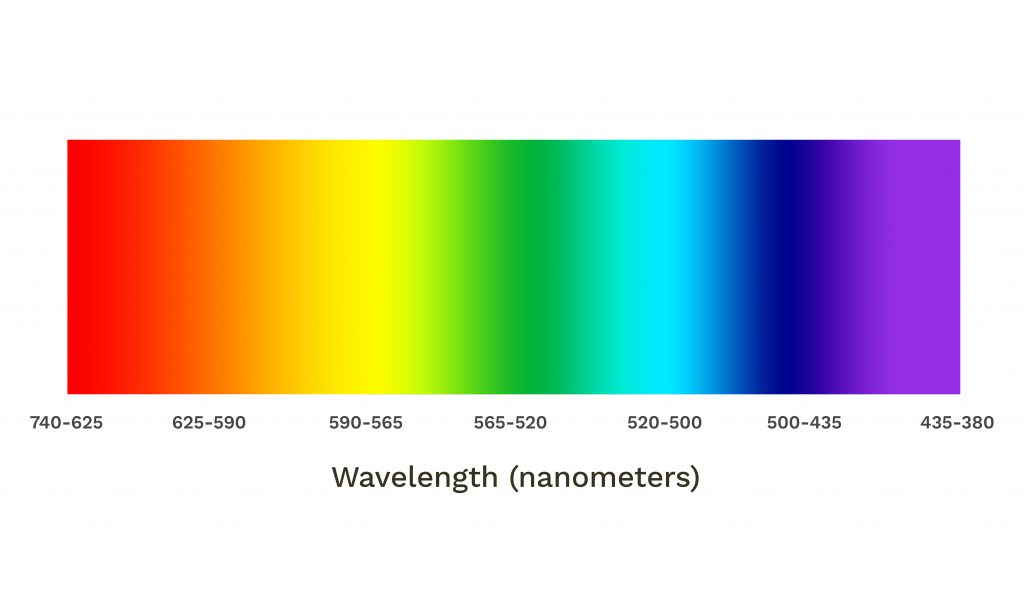
Let’s take a look at some more terms that will come in handy later on,
Photosynthesis– The process by which plants convert light energy into chemical energy with the help of some other compounds and use it as a source of fuel.
Photomorphogenesis- The process by which the growth patterns of plants respond to light such as the bending of stems towards light or transitioning from vegetative state to flowering state.
Photosynthetic Photon Flux Density (PPFD)- It is the amount/intensity of PAR light that lands on a square metre area per second. It is measured in µmol/m2/s. Don’t be too worried about the conventions, just there so that you can make informed decisions when buying grow lights.
Light Duration Integral- The total number of hours of light times the intensity of light a plant receives during a 24 hour period. Basically PPFD converted to a day’s length. Used as a tool to measure and maximize growth.
Photosynthetically Active Radiation (PAR)- Already covered this earlier, look above the photo of light spectrum.
Plants have receptors that can respond to varying photon wavelengths by triggering different growth characteristics, which makes lighting control a powerful tool to alter the appearance, flavour and nutrient content of microgreens. Some aspects of growth that can be influenced by lighting control are as follows:
It is worthwhile to note that the plant response to light conditions are a part of a larger process and the results vary depending on plant species, variety, growth environment, light intensity and more.
With that in mind, let’s find out how different wavelengths of light generally affect growth of microgreens.
Ultraviolet Light (100-400nm)- While this part of the electromagnetic spectrum is currently considered outside the PAR range, it may offer new applications once the research on this range of wavelengths has been sufficiently developed.
As per current research, we know that UV-A radiation (320-400nm) in limited amounts during the seedling phase elicit higher concentrations of phenolic compounds and flavonoids in some species of microgreens. UV radiation also causes for thicker and deeper coloured leaves. Potential benefits of UV light also include developing resistance to environmental stress, pests, fungal and bacterial infections.
Blue Light (400-500nm)- Research indicates that blue light has pronounced effects on the health of microgreens, especially in the early stages such as promoting plant compactness and early root propagation. It can also improve overall plant quality as a growth regulator by increasing accumulation of chlorophyll, as well as impart plants with rich taste and deep colours.
Green Light (500-600nm)- Most plants including microgreens appear green because a higher proportion (up to 50%) of incident green light is reflected by the chlorophyll in leaves. Contrary to popular assumption, green light does play an important role in photomorphogenesis of plants to alter photosynthetic efficiency and leaf area when used in combination with blue and red light spectrum.
Red Light (600-700nm)- This band is by far the most effective at stimulating photosynthesis and promoting growth of plants. It is found to increase bioactive antioxidant compounds as well as overall fresh weight of plants. However, it is worth noting that the desirable effects of red light are dependent on its combination with blue light and far-red light.
Far-Red Light (700-850nm)- Far-red or Deep red light is an interesting area due to its interaction with red and blue lights. In nature, far-red light elicits an extension and expansion response of leaves causing them to grow longer and wider. This effect, when carefully manipulated with the growth regulating ratio of blue-to-red light can boost fresh weight, leaf area and phytochemical concentrations (the good stuff you want to eat microgreens for).
Short answer, it depends. Many factors like which kind of microgreens, whether it is grown outdoors, in shade or indoors and so on. When it comes down to light, there are three main factors that influence the optimal growth of microgreens in general:
As a general rule of thumb, most microgreen varieties can grow well with 8-12 hrs of light. A particular microgreen growing in natural sunlight do not need as much exposure time as compared to one growing in the shade or indoors under artificial light. This is simply for the reason that PPFD and nutritional content of sunlight just trumps any artificial light out there. 6-8 hours of strong sunlight is enough of majority of sun-loving variants while shade-lovers can thrive with 10-14 hrs of indirect sunlight or assisted by artificial light.
That being said, you may not live somewhere that receives strong sunlight through out the day and also length of day varies according to time of year as do the intensity of sunlight. This is when you can resort to using artificial lights to supplement the sunlight or tweak certain growth characteristics. The quality of artificial light then provided can ensure proper growth and result in flavourful, crisp leaves.
It is recommended to use full spectrum LED grow lights to get optimal PAR light or you could also go for fluorescent lamps (but honestly, apart from the lower buying cost, why? LEDs are the future and they are just better in every way). Some lights you could use are listed below:
Depending on the species, some microgreen grow best with long periods of low intensity light while others need strong light for shorter periods of time. Without going in to too many confusing details, here are several varieties of microgreens and their general light requirements.
Species that need strong light for at least 6 hours with weak light for another 4-6 hours:
Some common shade-lovers that grow best with 10-16 hours of indirect sunlight or comparable artificial lights:
Strong, squat stems, deeply pigmented and thick leaves are characteristic of healthy microgreens that are ready for harvest. It is not always the case that you get it right in the first try and often times you might catch yourself wondering what went wrong looking at a pale and scrawny batch. Here are a few tips to get a better idea of what the growing plant is trying to tell you:
I hope you have gained some insight into the proper way to lighting microgreens and the importance of Light in the growth of microgreens. The best way is always to just start with what you have and learn as you go. Growing microgreens is not only a healthy addition to your diet, it is also a satisfying process to be involved in. As with anything, practice makes perfect and the sooner you begin, the better you can be down the road. Happy cultivating!
References and further reading: