 Your organic nutrition
Your organic nutrition
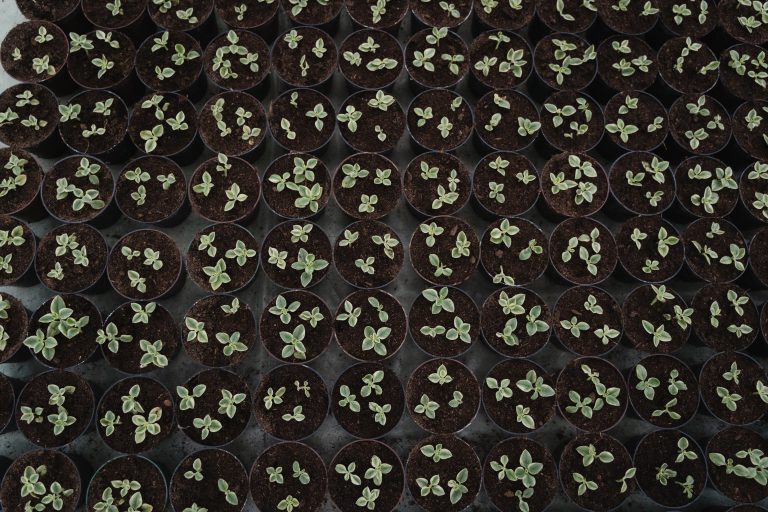
You might have heard about microgreens, you might have read about microgreens. Now, You are ready to try them out! Doing research and thinking too much about it at the beginning will waste your time and this might also take you to a confused state. What you should be doing as a beginner in microgreens, is just start growing directly. Get some potting soil and some seeds that can be used to grow microgreens. Grow them, just as you grow any seed. Watch them grow, try the taste, and get the hang of it. This article is for those who want to dig a bit deeper and start to optimize different growth factors. We will go through the three major growth mediums that can be used for growing microgreens in this article. There is no best medium for everyone and for every situation. So it is up to you to choose which one you should use depending on your own needs. Let’s start with the soil.
1. Soil
This should be obvious. It is nature’s invention. You cannot find anything more organic and purposeful to grow microgreens. Soil is not just a medium to grow plants. Soil is an ecosystem with many living organisms and transactions of different compounds between them.
Why choose soil?
If your reason for growing microgreens is benefiting from completely organic plant nutrition
Artificially created or extracted nutrients are incomplete and will yield an imbalanced nutrient system in the soil. Of course, this is only reasonable to think about if you value your form of nutrient intake to be perfectly organic. Mostly when we provide synthetic nutrients, we give a high priority to the macronutrients in soil, which are Nitrogen (N), Phosphorous (P), and Potassium (K). Properly maintained soil provides balanced micronutrients and other growing conditions required for growth.
Why choose another growing medium?
Microgreens, as they are consumed in their early stages of plant growth, receive most of the required nutrients from the seed itself. Depending on the type of plant, they might need a bit of nutrients for optimal growth. So for microgreens, well-maintained and nutritious soil is a good to have but not a necessity. There are multiple factors like water retention, ease of use, reusability, effectiveness, cost, etc. These factors can be optimized by changing or altering growing mediums. An obvious factor is that soil is messy. There will be living organisms, bugs, dirt, bees, etc. So soil may not be the best if you are planning to grow microgreens in your kitchen or at some place where you want to avoid the mess.
How to optimize soil?
You can make soil to be better for indoor purposes by sterilizing it. There are different methods for sterilizing the soil, mostly heating up and cooling down. A google search would help you to find a DIY on how to sterilize the soil. Here is an article that I liked. Another issue with soil is also that it may contain large particles, which may cause the microgreens to have uneven growth. It is better to use potting soil or pot mix, in which you can fine-tune the nutrients, consistency, aeration, water-holding capacity, etc according to your needs. You can also create your own pot mix. In conclusion, soft sterile, and fine soil should be the go-to kind of soil mix for microgreens.
Below are some good and compatible potting mixes from Amazon
2. Coconut Coir
Coconut coir is one of the best mediums for growing microgreens. Coconut coir is basically coconut husk processed and dehydrated. On market, it is available in different sizes and shapes. As it is in dehydrated form, it is lightweight and will expand once hydrated.
Why choose coconut coir?
Coconut coir is cheaper than soil mixes and hence good if you plan to grow in large quantities or for a longer period of time. Coconut is way easier to store as it consumes really less place and it can be used at any time. Due to the formation of molds and fungi, it is better to hydrate from the bottom. This medium absorbs water from the bottom to keep itself hydrated better than other mediums. It retains water in the right amount needed for microgreens. So this makes sure that the greens receive enough water but not also more than needed. As the molecules of coconut husk are not tightly packed there will always be good aeration and this also helps the roots to penetrate through the medium easily.
In general, I think coconut-coir mediums are the best available as of now.
Why not choose coconut coir?
It is still a bit messy, so it doesn’t completely solve the issue with soil. A better choice would be coconut coir fiber or coconut coir fiber mats but this adds the price a bit as well. Coconut coir is less in nutrients and you may have to add nutrients, which may not be needed for soil. This medium is also not optimal for reuse.
Below are some coconut coir husks from amazon:
3. Hemp mats
Hemp-based mats are made from the hemp plant which is a marijuana plant with very low THC content. They are made by weaving hemp fibers loosely and then adding more layers so that the mats don’t easily break apart.
Why choose Hemp mats?
The best thing about any mats is that they are less messy. You can just cut them into the tray size and start growing. Hemp mats have very high moisture retention and thus you can reduce the number of times you have to water the plant. Hemp mats are a great choice for professionals because of their ease of use.
Why avoid hemp mats?
The main disadvantage of hemp mats is that once they are wet, they lose integrity very easily and can tear apart. They are also a bit more expensive than coconut coir and soil. Depending on the plant for some microgreens this medium works better but almost all of them can be grown on hemp mats.
Below you can find some Hemp mats available on the market
These are the major ones available on the market. Below are some other growing mediums which can be used but are to be taken care of with more expertise and effort. There will be a second article, where these Mediums will be further analyzed and explained in detail.
Conclusion
So which one should you use?
I recommend you use one of the main three majors we have above. If you consider all the different factors like availability, price, ease of use, etc. Then you will see that the other options mostly will not be sustainable for a prolonged period. In conclusion from the major three if you want to have the optimal medium for your plant then potting soil mixes would be the best. If you are willing to provide external nutrients then coconut coir would be great. If you want to have a medium that is least messy and can be used professionally then hemp mats or coconut coir-based mats would be the best go-to.



Thanks for your blog, nice to read. Do not stop.