 Your organic nutrition
Your organic nutrition

Microgreens in Hydroponics
Basically, hydroponics is a method of growing plants without soil. The plants spend their lives in an aquatic environment. The nutrients and oxygen are supplied through the water. In the case of microgreens, the microgreens are planted in an aquatic environment instead of soil, and the nutrients essential to each plant are mixed into the water in which they grow. The biggest advantage of hydroponics is that it does not require a nutrient medium.
How to provide nutrients to Microgreens in Hydroponics
In a normal growing system like soil, the plants are supplied with nutrients by themselves. Depending on the quality of the soil used, the plants will naturally get enough nutrients. However, in the soil system we have to worry about pests, soil-borne diseases and less control over growth.
In a hydroponic system, however, there is no soil to provide nutrients to the plants. The nutrients are supplied to the plants through the solution. Basically, the plants only receive the nutrients and minerals that actually enter the solution in which they grow. Therefore, it is important to keep a range of nutrient solutions on hand to provide the plants with the necessary and appropriate vitamins and minerals. Basically, there are two types of nutrients that can be added to a hydroponic system, namely basic nutrients and additives.
Base Nutrients
Basic nutrients are the main food for plants. Basic nutrients are the type of solutions that provide a range of vitamins as a complete meal for the plants. These nutrients vary depending on the plant and the growth stage of the plant. Even though the basic nutrients are considered a complete meal for the plants, sometimes the plants need some boosters and
additives in the mix.
The 5 Key nutrients
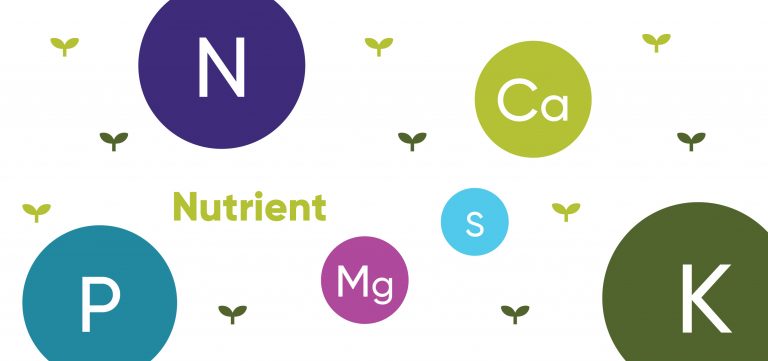
All the plants which grow over soil or in water basically need the 5 nutrients and it can be called as key nutrients as well. They are listed below.
Nitrogen
Nitrogen is one of the most important components for plant growth. It is used for basic stem and leaf growth in plants. Nitrogen also plays a major role in converting sunlight into energy. The component used for this is called chlorophyll, and nitrogen is the main component of it. Nitrogen also helps build amino acids, which are used to make plant proteins.
Phosphorus
Phosphorus is responsible for the root system of plants and the formation of seeds.
It is also involved in protein synthesis, so it builds up the plants’ tissues. A lack of phosphorus leads to a weakening of the flowers and seeds.
Potassium
Potassium regulates the uptake of CO2 by plants during the photosynthesis process. Without CO2, the photosynthesis process does not work. Potassium also helps regulate the plant’s water balance and activate growth enzymes. When potassium levels are low, plant growth slows because the plant cannot absorb enough CO2 or water.
Calcium
Calcium is an important component of the plant’s cell wall. A durable cell wall strengthens the tissue and makes it grow faster. Calcium can also neutralize cell acids, which allows better penetration of water and nutrients. A lack of calcium leads to a breakdown of the cell structure, resulting in a wilted, browned appearance.
Magnesium
Magnesium promotes the uptake of phosphorus by plants, which supports photosynthesis. Chlorophyll, the essential growth factor that gives plants their green color, consists in part of magnesium. Without magnesium, your plants will lose color and develop more slowly.
Choosing correct base nutrients
N-P-K are the most important staple foods. The letters stand for nitrogen (N), phosphorus (P) and potassium (K). Most available nutrients have a balanced N-P-K ratio. For example, a solution that has 5-5-5 for N-P-K on the package contains 5% of each of the nutrients.
If your plants need more protein and stronger stems and leaves, you need a higher nitrogen ratio, about 20-6-6.
If you want to improve the flowering and seed formation of your plants, for example during the flowering phase, you need a high phosphorus ratio, for example 6-20-6.
If you want to strengthen the roots, e.g. when transplanting plants, you need a high phosphorus and potassium ratio, e.g. 6-20-20.
Additives
Additives are enhancers that support the animals’ growth and immune system, just as humans take various vitamins. Basically, additives are supplements that support the health of the animals. Some additives are listed below.
Flower boosters
As name suggests these additives help maximize the density and yield of the blooms.
Mycorrhizae
Mycorrhizae, which are little fungal filaments, naturally cling to plant roots. While ingesting the sugars the plant generates, they aid the plant in getting nutrients and moisture. This is a natural cooperation that is advantageous to both sides. In order to emulate the benefits of this biological interaction, you may include this in your hydroponic garden at different phases of its life cycle.
Enzymes
Giving enzymes as supplements helps the plant to breakdown the nutrients for easy absorption. These enzymes are also capable of preventing over growth.
Vitamin B1
Thiamine, a vitamin of the B1 group, promotes phosphorus absorption and supports plant growth and vitality. Additionally, it enhances root growth and boosts the plant’s defenses against disease. At any point in the life cycle, vitamin B1 can be added.
Root Stimulants
Root stimulants promote root growth, which strengthens the plant’s structural support and promotes increased nutrient uptake. You may apply this at any time, but the early phases of the life cycle or if you have structural issues like root rot are very crucial.
Sweeteners
These additives enhance the taste of fruit by encouraging the absorption of nutrients.
Importance of pH value
The pH of the water used in hydroponics, in addition to the fundamental nutrients and additions, is one of the most crucial factors to watch out for. Because it impacts the availability of nutrients to developing plants, proper pH is essential when using hydroponics. Alkaline water, which has a high pH, prevents nutrients from being absorbed by the plants, resulting in nutritional deficits.
The pH requirements for plants cultivated hydroponically differ from those for plants grown in soil. The advantages of soil-grown plants include the presence of microorganisms, organic matter, and pH-regulating interactions between water and minerals. It is crucial to manually control the pH of the water since hydroponically produced plants do not benefit from all of these advantages. For plants cultivated hydroponically, the ideal pH range is often between 5.5 and 6. Below is a chart outlining several plants’ ideal pH ranges.
Ways to measure pH value in Hydroponics
Since pH plays a major role in the growth of plants in hydroponics, it is very important to measure or monitor it regularly. The hydroponic solution must be tested regularly after the addition of nutrients or additives. It can be measured by the following methods
pH test strips
They are small paper strips which show the pH value by different colours when it is dipped into the solution to be tested.
pH testing solution
These are solutions which we can add to the testing solution and compare the result with the given colour chart.
pH Metres
These are digital pH measuring device which can give more accurate and fast pH values from the solution. However it is more costly and has maintenance such as calibration.